Bluetooth hearing aids
Hearing aids of the past often limited the wearer’s access to many personal audio devices such as mobile phones and music players. For example, to use a music player while jogging, you would have had to remove your Bluetooth hearing aids to accommodate a pair of earbuds. However, today’s sophisticated wireless hearing aids, such as the OpnTM from Oticon, use Bluetooth technology to make it possible to connect with personal electronic devices and stream signals directly to hearing aids.
Bluetooth and hearing aids
secure wireless platform.
Developed through a collaboration of leading technology firms, Bluetooth is a wireless communication platform that allows for the transfer of data between two or more electronic devices. The technology uses radio waves set to a high frequency to transmit data without interference or security risks. A wide variety of products incorporating Bluetooth connectivity have been developed, including mobile phones, music players, computers, tablets and televisions.
Apple has patented specific Bluetooth connectivity with hearing aids so that certain hearing aids can communicate directly with the iOS platform that runs iPhone, iPad and iPod Touch devices. This technology is designed to allow the devices direct connection without extreme stress on battery power. Most hearing aid manufacturers have released hearing aids that implement this Bluetooth technology, marketed as Made for iPhone™. Visit Apple's website for a current listing of specific hearing aids that are compatible with the iOS platform. Google is currently developing a hearing aid compatibility standard for the Android platform.
What if my hearing aids aren't Made For iPhone?
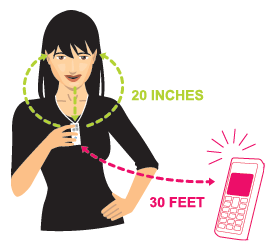
to your hearing aids.
If your hearing aid doesn't include a feature for direct streaming from your smartphone to your hearing aids, don't worry. Manufacturers of wireless hearing aids long ago created a clever solution for accessing this prevalent wireless standard. Wireless hearing aids can use compatible assistive listening devices, often called streamers, to provide a communication link between the wireless technology in the hearing aids and any Bluetooth-enabled device.
The wireless hearing aids can be paired with the streamer, and then the streamer can be paired with external devices. When it’s all set up, the streamer will pick up the Bluetooth signal from your phone, for example, and send it to your hearing aid via an FM signal or electromagnetic field, depending on the manufacturer’s design. Usually, the streamer is worn around the neck or placed in a pocket for hands-free operation.

No comments:
Post a Comment